Tuesday, 2 December 2014

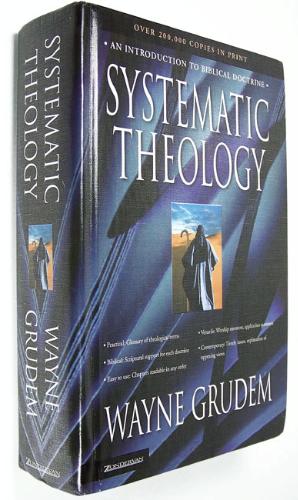
Systematic Theology, chapter 30

The work of the Holy Spirit.

Always an interesting topic!

Definition:  The work of the Holy Spirit is to manifest the active presence of God in the world, and especially in his church. ....the one present to do God's work in the world.

Already in Genesis 1:2, "the Spirit of God was moving on the face of the waters."

The Holy Spirit manifests Gods presence in the new covenant age.

The Holy Spirit brings God's blessing in the following ways:

1. Empowers.
   Gives and sustains both physical life and spiritual regeneration.
   Empowers God's people for service.
       Although the Holy Spirit was involved in Old Testament people's lives, it is much more clear in the New Testament.  "You shall recieve power when the Holy Spirit has come upon you...."
      Gives spiritual gifts to Christians for service.  "When spiritual gifts are active, it is another indication of the presence of God the Holy Spirit in the church."

2. Purifies.
   The Holy Spirit sanctifies us and cleanses us from sin.  He gives us the fruit of the spirit, which makes us more Christ-like.

3.  Reveals.
   Revelation of God's words to the apostles and prophets.
   Gives evidence of God's presence.  
   Guides and directs God's people. We as Christians need to take the example of the New Testament as the Holy Spirit clearly led his people, and have the Holy Spirit's leading in our lives.  This is not just a matter of following scripture and common sense, but also being aware of the blessing or lack of peace as one goes about life.
   He provides a Godlike atmosphere when he manifests his presence.
   He gives us assurance.
   He teaches and illumines. He helps us remember his word, and helps us understand God's word.
   The Holy Spirit unifies.
   The Holy Spirit gives stronger or weaker evidence of the presence and blessing of God according to our response to him.  (are we sinning and quenching the spirit). 

Thursday, 6 November 2014

Systematic Theology, chapter 29

I just want to say first, that I am pretty surprised at myself that I have made it more than halfway through this massive book!  621 pages down....


Now we are at chapter 29, The Offices of Christ.

Among the people of Israel, there were three major offices, prophet, priest, and king.

Christ fulfills all three of these offices.


1. Prophet:
    Prophets in the Old Testament spoke God's words to the people.  Often people in the New Testament spoke of Jesus as a prophet when they didnt know much about him, but saw something great from him.

The Epistles never call Jesus a prophet, but points out that Jesus is special as he is "the son."

They almost avoid calling Jesus a prophet, as he is so much more than that.  He is the one that all the prophets spoke about who was coming, thus putting him on a whole different level.  Jesus was also not merely a messenger of God's revelation, but the source of revelation from God.

Instead of saying, "thus says the Lord," but Jesus could say, "I say unto you."

2.  Priest
   In the Old Testament, priests were the ones who offered sacrifices on behalf of the people.  They made the people acceptable to come into God's presence.

As priest, Jesus offered a perfect sacrifice for Sin.   He continually makes it possible for us to come into God's presence.

As priest, Jesus continually prays for us. He is the only one who is perfectly suited as man and God, to understand and pray on our behalf.

3.  King.
Jesus was king, but his kingdom was not "of this world."  He is the king of kings and lord of lords.

There are parallels for us.  Adam was a prophet in that he had true knowledge of God and spoke truthfully about God and his creation.  Adam was a priest who could come before God (before the need for a sacrifice for sins).   Adam and Eve were also king/queen in the sense that they ruled over the creation around them.

After sin entered, those three offices were removed from Adam and Eve. Others took up the role throughout history, but often they were also sinful and corrupt in their jobs.

When Christ came, he did and does perfectly fulfill those three roles.

As Christians, we can imitate Christ in these roles, as we "prophetically" proclaim the gospel to the world, and prophetically proclaim God's truth to others.  We also are priestly in the sense that we can offer sacrifices of praise to God and come before him.   We are also kingly in that we share the kingly reign with Christ, and have been given limited authority.


Sunday, 2 November 2014

Elisabeths first week!

I was waiting to get some more "perfect" photos, but its not so easy with a newborn to get those, so here are a few photos from our first week with our sweet newborn, Elisabeth Evangelina.


 And I thought Markus was still a baby......
 Leave us alone....we're sleeeeeeping.

 A very happy big sister....
 Home from the hospital!
 A 3 am photo shoot at the hospital, since Elisabeth anyway didnt want to sleep.
 We get this fancy tray of sandwiches and coffee after all the hard work of giving birth, not bad, Sweden.
 Fresh out of the oven!
 Dont I look ready to get that baby out?  (Soon on the way to the hospital).

Friday, 24 October 2014

Systematic Theology, Chapter 28

Resurrection and Ascension

Jesus resurrection was not the same as Lazurus, in the sense that his resurrected body would never again taste decay or death.  He was the first fruits of a new kind of life, in which the body was made able to live eternally.

His body was human in the sense that he could touch, be touched, eat, etc.   Yet he could also appear and disappear quite suddenly.

Could it be, as Murray Harris suggests, that Jesus' resurrection body could go between physical and immaterial at will?  One minute he is flesh and blood, another minute walking through walls?

Scripture does not require this, and does not expressly say so, so we are walking a tight line if we make this conclusion ourselves.   The main point of scripture seems much more focused on how the resurrection body and Christ's later return are of a physical body.

Furthermore, the "new Jerusalem," is often focused on as a place for real physical bodies to be, not just spirits and angels.  What God made in the beginning, physical bodies, was very good, and we should not think necessarily that heaven and the new Jerusalem will be "body-less."

What significance does this have to us?  Paul says that the power by which God raised Christ from the dead is the same power at work within us.  "you also must consider yourselves dead to sin and alive to God in Christ Jesus."

Christ's resurrection insures our justification, and also that we will receive a perfect resurrection body.

The resurrection of Christ gives us also a future hope, and encourages us to live with this heavenly reward as our goal, continuing steadfastly in the Lord's work.

As Jesus ascended to heaven in his physical resurrection body, we can affirm that he went to a "place."   "...In my father's house there are many rooms," etc.   We cannot say where heaven is, but we can see indications that heaven is a place in the space-time universe.

Christ sits at the right hand of God in heaven, showing his dramatic completion of redeptive work, and also an indication that he has authority over the universe.

What a glorious Christ we serve. 

Wednesday, 22 October 2014

Wayne Grudems systematic theology, Chapter 27

The Atonement.

Did Christ really need to die?

Atonement: the work Christ did in his life and death to earn our salvation.

God's love and justice made it necessary for the atonement to happen.  God loves us and wanted to spare us his wrath, but his justice requires that somebody pay the penalty.

The fact that God wants to save us at all shows a great mercy on his part. He was not so merciful to the rebellious angels, for example.

Jesus life and words show that his death as a propitiation was absolutely necessary.  Christ obediently obeyed the law in our place, and suffered for us to take the penalty due to us.

Man does not just need a moral neutrality (i.e. the slate has been wiped clean by Christ's suffering), but also a righteousness, which comes through faith in Christ's obedience to perfectly follow the law.  Together this gives us entrance to heaven through faith.

Jesus suffered in four different ways:
1. Physical pain and death
2. The pain of bearing sin (all that he hated most deeply (sin) was poured out fully upon him.)
3. Abandonment (my God my God, why have you forsaken me?)
4. Bearing the wrath of God.  God put forward Christ as a propitiation, which is, "a sacrifice that bears God's wrath to the end and in so doing changes God's wrath towards us into favor."  wow.

God the father inflicted the penalty knowingly on his beloved son.
It was not an eternal suffering in penalty, but a complete payment was made by Jesus.  (If we had to pay the penalty for our sins, it would be eternal, but Jesus could pay completely by his perfect life and death on the cross).

Four terms can show how Christs death met the four needs we have as sinners.
1. we deserve to die as penalty for sin
2. we deserve to bear God's wrath against sin
3. we are separated from God by our sins
4. we are in bondage to sin and to the kingdom of Satan.

Christ's death responds to these needs in the four following ways:
sacrifice, propitiation, reconciliation, redemption.

Some other views throughout history:
1. Ransom to Satan theory.  (Christ's death was to redeem us from Satan who rules over us).
2. Moral Influence theory. God was not paying any penalty, but rather showing a loving example through his death on the cross.
3. Example theory. Christ's death is just a nice example for us...
4. Governmental theory. God demands payment, but since he is omnipotent, Jesus payment didnt cover our sins but rather showed that God's payment was paid.

Did Christ descend into hell? The apostles creed says yes, the Bible says....,

As the apostles creed was formed, this phrase originally meant, "was buried or descended in the grave."

1 Peter 3 speaks of how Christ went and preached to the spirits in prison...  This is not a "second chance for redemption for those who have already died, but rather an encouragement for us to witness boldly to those who are hostile around us.

Does this passage mean that Christ spoke to demonic spirits/fallen angels, or to proclaim release to Old Testament saints?  Probably not.

A more satisfying explanation is that the spirit of Christ was speaking through Noah during the time of the building of the ark to seek unbeliever's repentance.

Wayne Grudem even suggests that this phrase should be removed from the apostles creed.

Did Jesus die for the entire human race, or only for the "elect?"   Non-reformed  people say that Christ's atonement must be available to all, and if it was limited, then the gospel is limited.

Reformed people say that if Christ truly died for all, then all should be cleansed and go to heaven.  We dont know who the elect are, but God did, and many passages point out that Christ died for "his sheep," etc.   This is also called limited atonement, or particular redemption.

A non-reformed view speaks often of Bible verses that point out Jesus dying for the whole world.

Both sides agree:
1.  Not all will be saved.
2. A free offer of the gospel can be made to every person ever born.  All agree that Christ's death is of infinite merit.

Let's be careful to respect our brothers and sisters who take each side, and strive to share the gospel to all and all alike!


Friday, 19 September 2014

Systematic Theology, Chapter 26 (part 2)


We have just looked at the humanity of Christ, and now will look at the Deity of Christ. 

The word God (Theos), which is usually reserved for God alone, is used to refer to Jesus Christ several times. 

The word Lord (Kyrios) is also used of Christ.  (See Grudem's book for all the details). 

Other claims to deity include: 
when Jesus says, 
"before Abraham was, I am." 
"I am the Alpha and the Omega...the beginning and the end."  
"In the beginning was the word, and the word was with God and the word WAS God." 

The phrases "son of man," and "son of God," had significant meaning in their contexts. 

Jesus possessed attributes of deity:
Omnipotence (stilled the storm with his words, changed water to wine, etc)
Eternity (when he speaks of his existence throughout time)
Omniscience (knowing people's thoughts)
Omnipresence (not during his lifetime, but he says, "where two or three are gathered in my name, there am I in the midst of them.)
Sovereignty (ability to forgive sins)
Immortality (inability to die finally) Christ does die, but has an active role in his own resurrection!  "I will raise it up." "I have the power to lay it (Jesus life) down and I have the power to take it again." 
Worthy to be worshiped, something due only to God alone. 

Did Jesus give up some of his divine attributes while on earth?  Grudem argues that Jesus changed his roles and status, but his essential attributes as a part of the deity remained while he lived on earth.  Jesus gave up his status and privilege. So, Jesus is fully divine. 

In 1977, a group of recognized church leaders in England published the book,"the Myth of God Icarnate,"  which makes some foundational assumptions. 
1. The bible is NOT an absolute divine authority for us today
2. Christianity is evolving and changing over time.

We see a dividing point here.  Either we believe in Christs full deity and the authority of scripture, or else we begin on a slippery slope of being able to deny everything in scripture as we choose. 

Here are three other historical views of the person of Christ that are inadequate.
1. Apollinarianism.  Christ had only a human body, his mind/spirit were divine.  (rejected in AD 362)
2. Nestorianism. Divine and human Jesus were two separate persons! (condemned in the 400's AD)
3. Monophysitism (Eutychianism).  Jesus divine and human nature are separate, yet combine to create a new third type of nature. (Denied, because in this case Christ cannot be truly God nor truly man.)

451 AD, the Chalcedonian definition was made, and is a standard, orthodox definition.  
"....truly God and truly man, consubstantial with the Father according to the God head....to be acknowledged in two natures, indivisibly, inseparably, the property of each nature being preserved, and concurring in one person..."

We are able to point to aspects of the human nature and the divine nature with no problem between them.  For example, Jesus lay sleeping in the boat when the storm hit.  He was tired, YET he showed omnipotence by stilling the storm.  Tired yet all powerful!

To say that we cannot understand it is appropriate humility. To say that it is not possible seems more like intellectual arrogance. 

In general, what happens to either aspect of Jesus can be said of him as a whole.  Thus can Paul say, "they would not have crucified the Lord of glory."  The divinity of Christ cannot die, yet as a whole and in his human nature, Christ did die. 

This topic is the most amazing miracle in the whole Bible; that the infinite, omnipotent, eternal son of God could become man and join himself to a human nature forever....what a miracle and mystery. 

Next time, chapter 27, the Atonement. 


Systematic Theology, Chapter 26

The Person of Christ, how is Jesus fully God and fully man in one person?

He WAS fully God and fully man in one person, and WILL be so forever.

Starting with his humanity:
1. Christ is born of a virgin; conceived in the womb of his mother Mary by a miraculous work of the Holy Spirit, without a human father.   This shows us that salvation must come from the Lord, a virgin birth is an impossibility for man.  It unites humanity and deity in a perfect way.

Being born of a virgin allows Christ to have true humanity without inherited sin.  The angel Gabriel even pronounces to Mary, "therefore the child to be born will be called holy."

2.  Jesus had human weaknesses and limitations.
A human body, the need to grow up.  He became tired, thirsted, hungered, he eventually died.

Jesus also rose from the dead in a physical human body, which had been made perfect. He ascended into heaven with that body, to show a continuity between his existence in a physical body.

He had a human soul and emotions. "Now is my soul troubled." "He was troubled in spirit."  He marveled, he wept with sorrow, he learned obedience.  Yet in all this he never once sinned.

"In every respect he has been tempted as we are, yet without sin."

People near him saw him only as a man.  Jesus did a lot of miracles, yet when he approached his hometown, the people said, "where did this man get his wisdom and these mighty works?  Isnt this the carpenter's son?"

He was human, yet without sin.  When he says, "I am the light of the world,"  he points to pefect truthfulness and moral purity.  He says of his Father, "I am always doing what is pleasing to him." (we cannot say the same of our relationship with God!)

Was it possible for Jesus to sin? as a human, it is in his nature to be able to sin, but since he has a divine nature, we know that God cannot be tempted.  They somehow work in unity.
If Jesus had sinned, then he would cease to be God.  Yet his temptations were very real.
He stood fast to the end and triumphed over temptations, and in this way felt the full weight of these temptations.

Why was it necessary for Jesus to be fully human?
1. He was our representative, and obeyed where we and Adam disobeyed.
2. to be a substitute sacrifice.  Only by becoming one of us could he be an acceptable substitute for our sins and its punishment.
3. The one mediator between God and men.
4. Man was made to rule over creation, and only through Jesus is this put to right again.  "given all authority over heaven and earth..."
5. to be our example and pattern in life.
6. To be a pattern for our redeemed bodies.
7. To sympathise as high priest.  He has gone through the same temptations as we and knows what it is like.

Jesus will be a man forever. In his resurrection body, he ate, and had flesh and bones. And it is promised that he will come back in the same way we saw him go into heaven.  Fully God and fully man, yet one person, forever.

Tuesday, 16 September 2014

Wayne Grudem, Systematic Theology Chapter 25.

The Covenants between God and man.

Throughout history, God has had a “you do this, I’ll respond with this,” relationship with man, and that is solidified through covenants.  By definition, “A covenant is an unchangeable, divinely imposed legal agreement between God and man that stipulates the conditions of their relationship.”

Both parties are active, but because it is divinely imposed, man cannot negotiate or change the terms of the agreement.  Covenants never change, but they may be superseded or replaced by another covenant.

At the heart of all covenants is this one, “I will be their God, and they shall be my people.”
Even Adam and Eve can be said to live in the first covenant relationship, “you obey and I will bless you in the garden.”

Other covenants usually have an outward sign attached to them, such as circumcision, baptism, the Lord’s supper.  God was not forced to make a covenant, and indeed he made no such covenant with the animals he created, but shows his love for his people when he enters into covenant with them.
The covenant with Adam is still in force with us today, in the sense that perfect obedience leads to life, and “the wages of sin is death.”

Another covenant is called the covenant of Redemption.  In this covenant, the trinity agrees that the son will become man, be our representative, pay our penalty for our sin.
Many scriptures point to how the Father prepares a chosen people for the son, sends the son as a representative, prepares a body, accepts him, gives his all authority, etc.
The son agrees to become man, and become obedient, even to death on a cross, and the Holy Spirit agrees to do the will of the Father and empower Christ to carry out his ministry on earth.

The next covenant is the covenant of Grace. God and man have an agreement, and in this case Christ acts as mediator to fulfill the conditions of the covenant.  The condition for man is faith in the redeemer.  The promise of blessing in the covenant was a promise of eternal life with God.  In the Old Testament, this was shown by the sign of continuing to observe festivals and ceremonial laws, and is now shown through participation in the Lord’s supper.
This covenant of grace was in place from the time of Abraham.  Galatians 3:8 says,” The scripture preached the gospel beforehand to Abraham…”
The “old covenant,” which is spoken of in the New Testament, points to the Mosaic law, which was a restraint and custodian pointing people to Christ.

So Old Testament people looked in faith to the promised Messiah as a step in their redemption.  The sacrificial lambs in the Mosaic covenant did not actually take away sins, but foreshadowed the bearing of sin by Christ.

What a joy to be part of the new covenant (and the other covenants) of God!

Wednesday, 13 August 2014

Systematic Theology, Chapter 24 continued...

Sin (Part 2).

Are some sins worse than others?

Before God, even one sin makes us legally guilty and thus worthy of eternal punishment.  Adam and Eve's one act of disobedience is a perfect example, introducing death into the world and separating their relationship with God.

James 2:10-11, Whoever keeps the whole law but fails in one point has become guilty of all of it....

Some sins have more harmful consequences, both between us and our fellow man, and between us and God.   The Bible speaks of "greater sins," but in general, we can see sins that are done willfully, repeatedly, knowingly, with a calloused heart, are more displeasing to God than others.

Unintentional sin is still sin. (Just like speeding when you didnt know the speed limit is still punishable).

Coveting a neighbors car is a sin before God.  Stealing the car and killing the owner of the car is obviously a more "serious" sin.   The same goes for a new believer losing their temper and striking someone compared with a Mature pastor doing the same.

James 3:1, those whoe teach will be judged with greater strictness.  Teachers and those in leadership spiritually will be held to a higher standard of accountability.

What happens when a Christian sins?  We are still in the legal sense forgiven before God, for Christ's death paid for our past, present, and future sins.  We are still children of God, members of his family.

BUT, our fellowship with God is disrupted and our Christian life is damaged.  God still loves us but is displeased with us.  He disciplines us, because he loves us.

Hebrews 12:10, He disciplines us for our good, that we may share his holiness.

When we sin as Christians, our Christian life and fruitfulness in ministry are also damaged.  "As the branch cannot bear fruit by itself, unless it abides in the vine, neither can you, unless you abide in me."  John 15:4.

Peter says that sinful desires that remain in our hearts "wage war against your soul!" 1 Peter 2:11. To give into those sinful desires is to welcome enemies into the camp.

The danger of unconverted evangelicals.  A genuine Christian who sins does not lose their justification before God, BUT people who are "playing church," and not true believers should not be lulled into complacency that their sinfulness is ok.

A consistent pattern of disobedience to Christ coupled with a lack of the elements of the fruit of the Holy Spirit such as love, joy, peace, and so forth, is a warning signal that the person is probably not a true Christian inwardly, that there probably has been no genuine heart faith from the beginning and no regenerating work of the Holy Spirit. !

What about unpardonable sin?  Blasphemy against the Holy Spirit, what is that?

There are several possibilities, but Grudem leans towards a willful rejection and slander against the Holy Spirit's work attesting to Christ.  The example in the Bible was when the pharisees claim that Jesus is casting out demons by Beelzebul's power.

This requires a clear knowledge of who Christ is and the power of the Holy Spirit working through him, a willful rejection of the facts about Christ, and attributing that work/power to Satan.  

God does not just punish sin to help us to grow and learn from our sins, but rather because God's righteousness demands it, so that he might be glorified in the universe that he has created.

Next time, "The covenants between God and man." 

Wednesday, 6 August 2014

6 Years!

Here are a few photos from our 6 year anniversary...we went back to the ocean boardwalk where we had one of our first "Swedish" dates before we were even engaged, in Varberg. 


Of course, 2 kids and one on the way later....
 
A long walk on the boardwalk, mini-golf, chinese food, jumping in the ocean a few times, and a lot of relaxing!

Here we are at the same beach, 7 years ago....

Happy Anniversary, Daniel Norén!

Tuesday, 5 August 2014

Systematic Theology, Chapter 24

Sin.

What is it, where did it come from, did we inherit it?

Biblical human history is basically man in sin and rebellion against God, and God's plan of redemption for man.

Sin:  failure to conform to the moral law of God in act, attitude, or nature.

Clearly, our attitudes, and not just our actions, can be sinful.  And in contrast, the greatest commandment of all requires that our heart be filled with an attitude of love for God (Love the Lord your God with all your heart...)

The Bible also points out several times that our nature or character is fundamentally sinful.
"We were by nature children of wrath, like the rest of mankind."  Eph 2:3.

Commonly, it is said that the essence of sin is selfishness, but this is unsatisfactory, incomplete in it's definition.   The Bible, in 1 John 3:4, says, "sin is lawlessness," meaning both the written law of God and the unwritten law of conscience.

Sin is not just destructive to us, but wrong, opposite to the good character of God, a contradiction of God's holiness, and he must hate it.

Man and angels voluntarily sinned, and God is not to blame for sin, nor a cause of sin.
James 1:13, God can not be tempted with evil and he himself tempts no one.

The power of evil is in no way equal to God or even surprising to him.

The original sin struck at several basic points..
"what is true?" (knowledge), is God true or the serpent?
"what is right?" (morals),  Eve's evaluation or God's words. "She saw that the tree was good for food,"
"who am I?" Am I a creation of God, or do I want to be like God?

All sin is ultimately irrational.  It did not make sense for Adam and Eve to try to exalt themselves above God, or that there could be true gain in disobeying their creator.   Proverbs often speaks of "the fool," who engages in all kinds of sins.

We have inherited from Adam in two ways:
1. Inherited guilt.  We are counted guilty because of Adam's sins, and human death is a confirmation of that.

We might complain, "is that really fair?"  But God will primarily "render to every man according to his works" on Judgement day (Romans 2:6), so regardless of our inherited guilt, we have done plenty of sins ourselves.

More persuasively, if we think it is unfair to be represented by Adam, we should also think it is unfair for us to be represented by Christ and to have his righteousness imputed to us by God.

2. Inherited corruption.  We have a sinful nature because of Adam's sin.  This begins from conception (according Psalm 51:5).

Various restraints, like civil law, family expectations, human conscience, keep us from being as terrible as we could be.  Because of God's common grace, society has been able to advance.

Although we might do some "good," every part of our nature is affected by sin.  Paul says, "to the corrupt and unbelieving, nothing is pure; their very minds and consciences are corrupted." Titus 1:15.   We cannot please God on our own strength.  Isaiah says, "all our righteous deeds are like a polluted garment." Isaiah 64:6.

All people are sinful before God.
"They have all gone astray, they are all alike corrupt, there is none that does good, no, not one." Psalm 14:3.

Our sinfulness is not based on our ability to do good, but rather the measuring line is God's perfect holiness and moral law.

Are infants guilty, or do they have to reach an age of accountability? Clearly children are sinful and rebellious, already in their first year or two of life.  But what is a child dies before they are old enough to understand the gospel?  In that case they would not be saved on their own merits, but rather on the basis of Christ's work of redemption.  Both John the Baptist and David speak of belonging to God, or being filled with the Holy Spirit from birth.  This may be so with infants.  God's "normal" example is to save the children of believers in Biblical history, so in regards to children of believers who die very young, we have no reason to think that it would be otherwise.

But that is not God's normal way of salvation.  It is by believing in Christ's atoning work we are saved, and always because of God's mercy and not our merits.

Legal guilt means that even one tiny sin can make us guilty before God, and therefore worthy of eternal punishment.

More to come next week....

Systematic Theology, Chapter 39

*Just a reminder that this study of Wayne Grudem's book, Systematic Theology, is not by any means me teaching, but rather a simple sum...